


Last Updated: October 12, 2026
What Type of Landscape Lighting Works Best for Tulsa Homes?
The best landscape lighting for Tulsa homes is a low-voltage LED system with a transformer, it handles clay soil, summer heat, and freeze-thaw winters better than solar or line-voltage.
Low-voltage landscape lighting runs on 12 volts through a transformer, powering LED fixtures on buried cable. Line-voltage ties into your panel, costing more and limiting placement.
| Lighting Type | Power Source | Best For | Watch Out For |
|---|---|---|---|
| Low-voltage LED | Transformer, buried cable | Pathways, trees, architecture | Needs a working outdoor outlet |
| Solar | Built-in panel | Quick fixes, remote spots | Weak output in shade and winter |
| Line-voltage | Home electrical panel | Large commercial lots | Higher install cost, permits |
Low-voltage LED is the default answer for Tulsa yards. Solar is a supplement, not a replacement, and line-voltage only makes sense on large properties.
For the full technical breakdown, the U.S. Department of Energy outdoor lighting resources covers the basics clearly.
Pathway Lighting Ideas and Landscape Lighting Ideas for Fall
Fall is the best time to install or expand landscape lighting in Tulsa: cooler soil makes trenching easier, and your system is ready before the holidays.
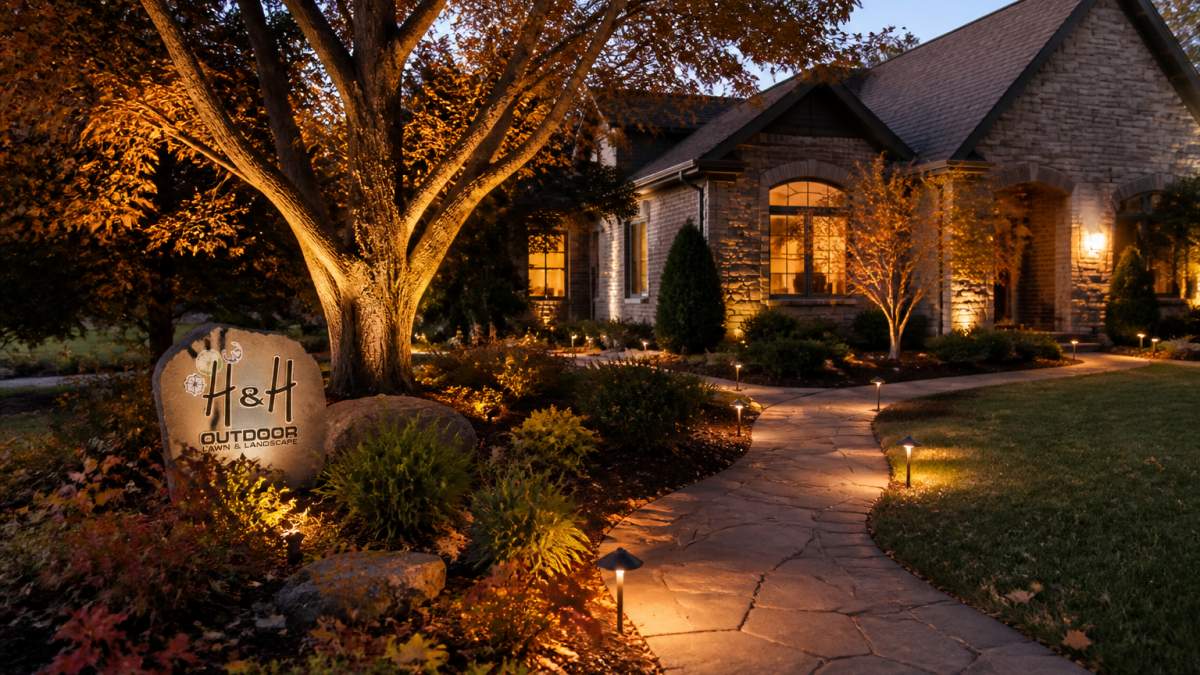
For guidance on light levels and avoiding glare, the Illuminating Engineering Society publishes recommended practices for residential exterior lighting.
How to Install Landscape Lighting Safely
Safe installation comes down to three things: a GFCI-protected outlet, a properly sized transformer, and buried cable that won’t get cut by a shovel.
What You’ll Need
- Low-voltage transformer with photocell or timer
- LED fixtures and stake mounts
- Direct-burial low-voltage cable
Step 1: Map the Layout Before You Dig
Walk the yard at dusk and flag each fixture location. Group fixtures into runs of no more than 10 to 12 units per cable, and keep total wattage under the transformer’s rating with headroom.
Step 2: Confirm Your Power Source
The transformer needs a GFCI outlet. If your outdoor receptacle isn’t GFCI-protected, have an electrician upgrade it first, the single most important safety step.
Step 3: Trench and Run Cable
Bury cable 15 to 20 centimetres deep, deeper under walkways or anywhere a shovel might go. Leave slack at each fixture so future adjustments don’t strain the connection.
Step 4: Connect Fixtures and Test
Use waterproof connectors on every splice, then power up and check each fixture. Adjust aim and brightness after dark, not in daylight.
The most common mistake is skipping the GFCI outlet or overloading the transformer. Both create a shock or fire risk, and both are far cheaper to fix before installation than after.
If you would rather not trench, wire, and troubleshoot yourself, this is the kind of work our team handles every week. You can review electrical safety guidance from the U.S. Consumer Product Safety Commission before starting, or get a free estimate and let us handle it.
The hardest part is getting layout, wiring, and timing right so the system still works three winters from now. HH Outdoor Tulsa has spent more than 26 years designing, installing, and maintaining outdoor lighting for Tulsa-area homes, and we are fully licensed, bonded, and insured. Get a free estimate from HH Outdoor Tulsa and light your property the right way.


